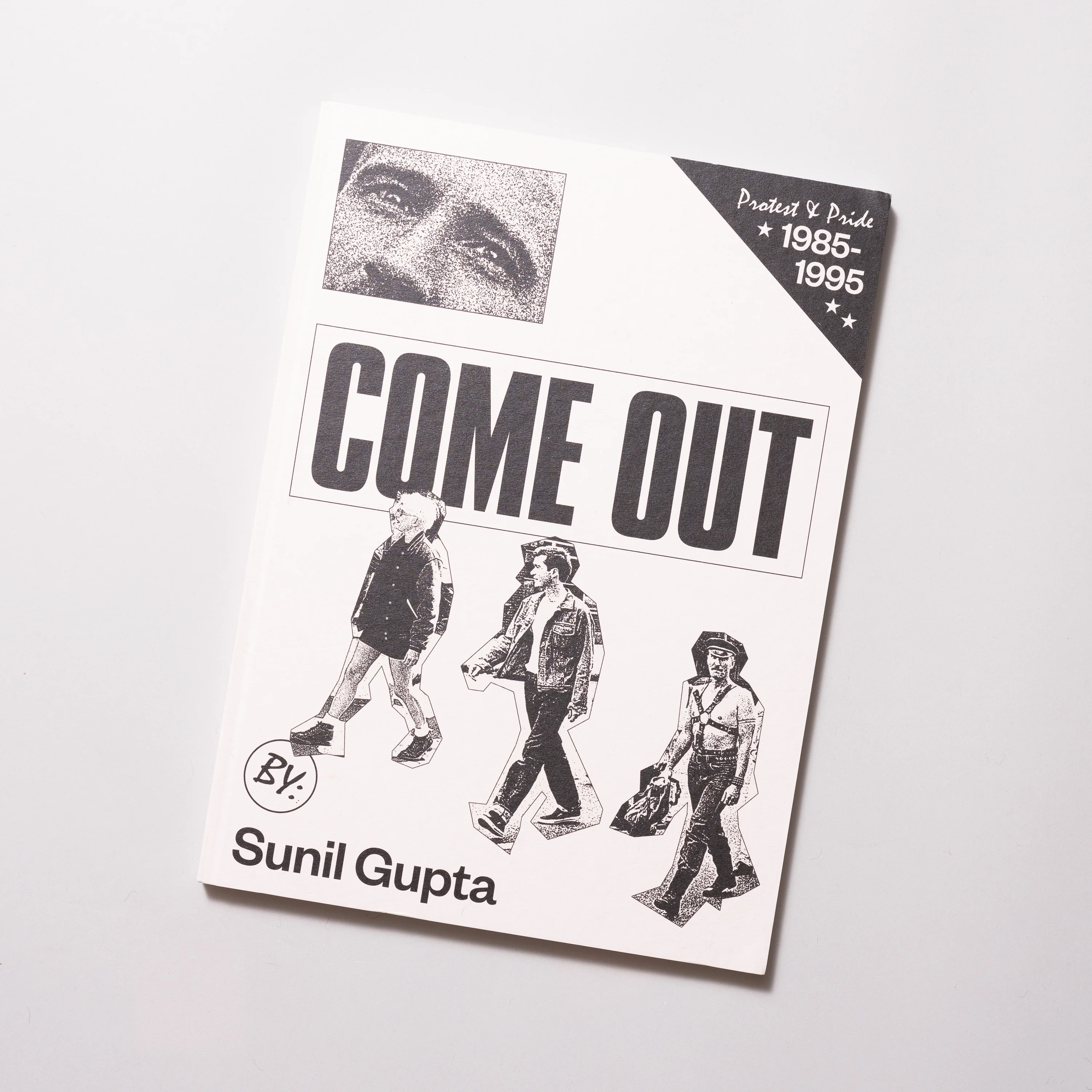
Sunil Gupta - Come Out
When Sunil Gupta moved to London from New York in the late 70s, he was surprised to find no equivalent of New York's Christopher Street. All the gays and lesbians appeared to be in hiding. Only to be encountered in a handful of pubs and after-hours clubs, which closed very early. However, this was about to change with the development and growth of the 1970s fledgeling gay marches into the more significant numbers of more confident people who came out in gay public protests.
The photographs in this new book encompass the period from the mid to late 1980s and recount Pride marches before corporate sponsors, and their logos, as well as specific marches that were responding to a single event; antinuclear CND protests and demonstrations supporting the miners’ strikes, and of course, the several protests against Clause 28 - a legislative designation for a series of laws across Britain that prohibited the "promotion of homosexuality" by local authorities. Introduced by Margaret Thatcher's Conservative government, it was in effect from 1988 to 2000 in Scotland and from 1988 to 2003.
"Photography was also in the middle of a great documentary debate at that time, questions arose regarding shooting political marches, who was taking the pictures and for which purpose. I wanted to make my point of view very clear, which was that of someone from within the community. And it was my community." - Sunil Gupta
Born in New Delhi, India, relocated to Montreal, Canada, before studying at the Royal College of Art in London, Gupta has been using photography as a critical practice since the 1970s. Subversive, impulsive, personal and political, Sunil Gupta's socially engaged projects have focused on such issues as family, race, migration and the complexities and taboos of sexuality and homosexual life. His work has been instrumental in raising awareness around the political realities concerning the fight for international gay rights and of making visible the tensions between tradition and modernity, public and private, the body and body politics.
Shipping Worldwide now
Size — 330x240mm
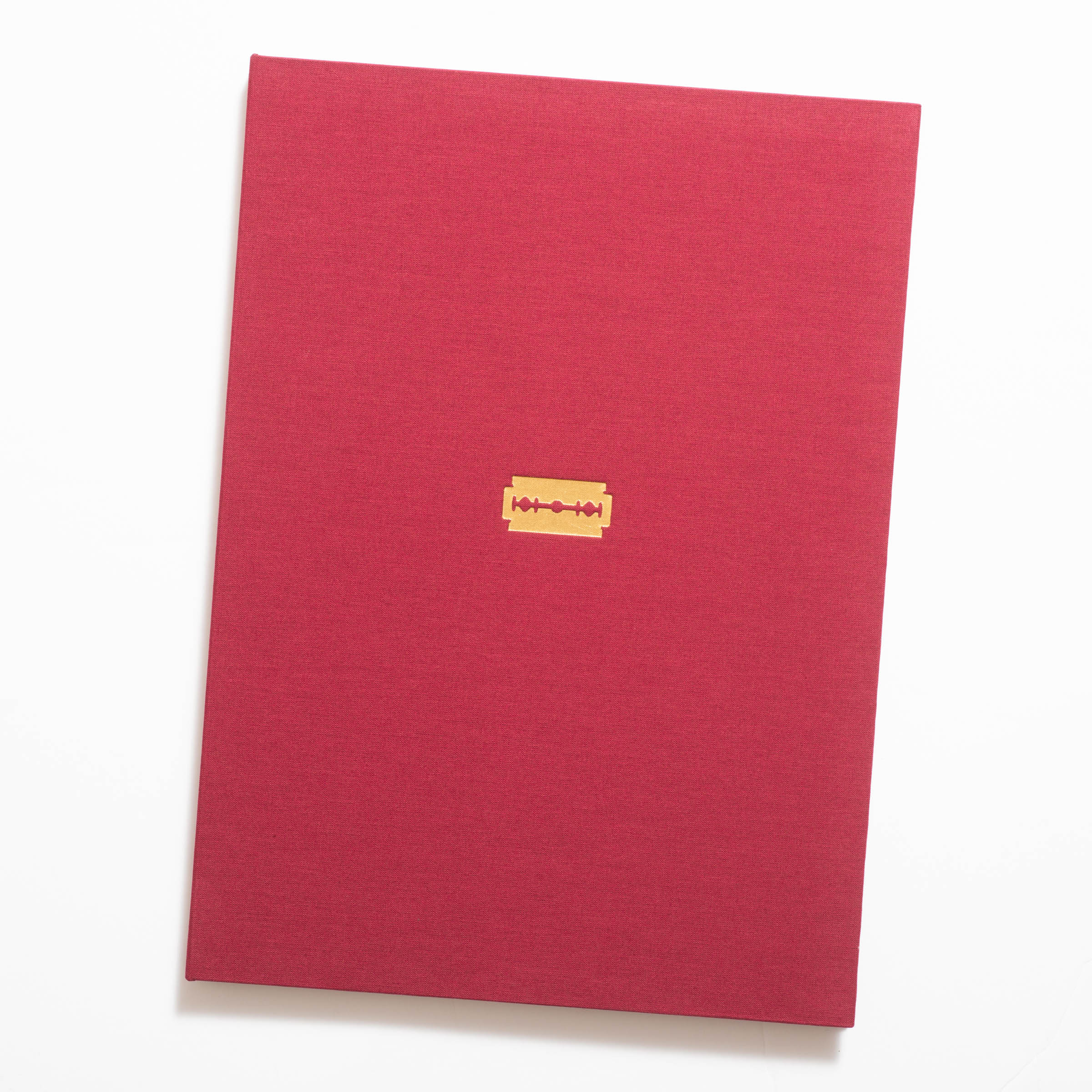
Cover — Hard Back / Chopped boards
Printing — Duotone
ISBN — 978-1-913288-60-0
Pages — 112
When Sunil Gupta moved to London from New York in the late 70s, he was surprised to find no equivalent of New York's Christopher Street. All the gays and lesbians appeared to be in hiding. Only to be encountered in a handful of pubs and after-hours clubs, which closed very early. However, this was about to change with the development and growth of the 1970s fledgeling gay marches into the more significant numbers of more confident people who came out in gay public protests.
The photographs in this new book encompass the period from the mid to late 1980s and recount Pride marches before corporate sponsors, and their logos, as well as specific marches that were responding to a single event; antinuclear CND protests and demonstrations supporting the miners’ strikes, and of course, the several protests against Clause 28 - a legislative designation for a series of laws across Britain that prohibited the "promotion of homosexuality" by local authorities. Introduced by Margaret Thatcher's Conservative government, it was in effect from 1988 to 2000 in Scotland and from 1988 to 2003.
"Photography was also in the middle of a great documentary debate at that time, questions arose regarding shooting political marches, who was taking the pictures and for which purpose. I wanted to make my point of view very clear, which was that of someone from within the community. And it was my community." - Sunil Gupta
Born in New Delhi, India, relocated to Montreal, Canada, before studying at the Royal College of Art in London, Gupta has been using photography as a critical practice since the 1970s. Subversive, impulsive, personal and political, Sunil Gupta's socially engaged projects have focused on such issues as family, race, migration and the complexities and taboos of sexuality and homosexual life. His work has been instrumental in raising awareness around the political realities concerning the fight for international gay rights and of making visible the tensions between tradition and modernity, public and private, the body and body politics.
Shipping Worldwide now
Size — 330x240mm
Cover — Hard Back / Chopped boards
Printing — Duotone
ISBN — 978-1-913288-60-0
Pages — 112
Description
When Sunil Gupta moved to London from New York in the late 70s, he was surprised to find no equivalent of New York's Christopher Street. All the gays and lesbians appeared to be in hiding. Only to be encountered in a handful of pubs and after-hours clubs, which closed very early. However, this was about to change with the development and growth of the 1970s fledgeling gay marches into the more significant numbers of more confident people who came out in gay public protests.
The photographs in this new book encompass the period from the mid to late 1980s and recount Pride marches before corporate sponsors, and their logos, as well as specific marches that were responding to a single event; antinuclear CND protests and demonstrations supporting the miners’ strikes, and of course, the several protests against Clause 28 - a legislative designation for a series of laws across Britain that prohibited the "promotion of homosexuality" by local authorities. Introduced by Margaret Thatcher's Conservative government, it was in effect from 1988 to 2000 in Scotland and from 1988 to 2003.
"Photography was also in the middle of a great documentary debate at that time, questions arose regarding shooting political marches, who was taking the pictures and for which purpose. I wanted to make my point of view very clear, which was that of someone from within the community. And it was my community." - Sunil Gupta
Born in New Delhi, India, relocated to Montreal, Canada, before studying at the Royal College of Art in London, Gupta has been using photography as a critical practice since the 1970s. Subversive, impulsive, personal and political, Sunil Gupta's socially engaged projects have focused on such issues as family, race, migration and the complexities and taboos of sexuality and homosexual life. His work has been instrumental in raising awareness around the political realities concerning the fight for international gay rights and of making visible the tensions between tradition and modernity, public and private, the body and body politics.
Shipping Worldwide now
Size — 330x240mm
Cover — Hard Back / Chopped boards
Printing — Duotone
ISBN — 978-1-913288-60-0
Pages — 112